What's the Difference Between Segmental and Non-Segmental Body Composition Analyzers? Find Out Which One is Right for You
Discover the difference between Segmental and Non-Segmental body composition analyzers and which one suits your health goals best.
By TANITA US

Introduction
If you've started exploring body composition scales, you may have noticed that some are described as "segmental" and others are not. What does that actually mean — and does it matter for someone just starting out?
The short answer: both types give you far more useful information than a regular scale, and both are great tools for building healthier habits. The difference is in how much detail you get. Here's what you need to know.
First, What is Body Composition Analysis?
A traditional scale tells you one thing: how much you weigh. But weight alone doesn't tell you much about your health. Two people can weigh exactly the same and be in very different physical condition — one with lots of lean muscle, the other carrying excess body fat.
Body composition analysis breaks your weight down into what it's actually made of: fat, muscle, bone, and water. That's the information that helps you set smarter goals, track real progress, and understand what's actually happening in your body — not just what the scale says.
TANITA body composition analyzers use a safe, painless technology called bioelectrical impedance analysis (BIA) to do this. It works by sending a tiny electrical signal through your body. The signal travels easily through muscle and water, but slows down in fat. From that, the device calculates your body composition in seconds.
What is a Non-Segmental Analyzer?
A non-segmental body composition scale measures your body as a whole. You step on, stand still for a few seconds, and it gives you a full snapshot: your body fat percentage, muscle mass, body water, bone mass, and more — all in one reading.
This is the most common type of body composition scale, and for good reason. It's simple, fast, and genuinely eye-opening if you've only ever used a traditional scale. Think of it as upgrading from a black-and-white photo to a color one — you're seeing so much more than before.
This is a great fit if you:
- Are new to body composition tracking
- Want a simple, step-on-and-go experience
- Are focused on tracking overall trends in body fat and muscle over time
- Want meaningful health data without a complicated routine
What is a Segmental Analyzer?
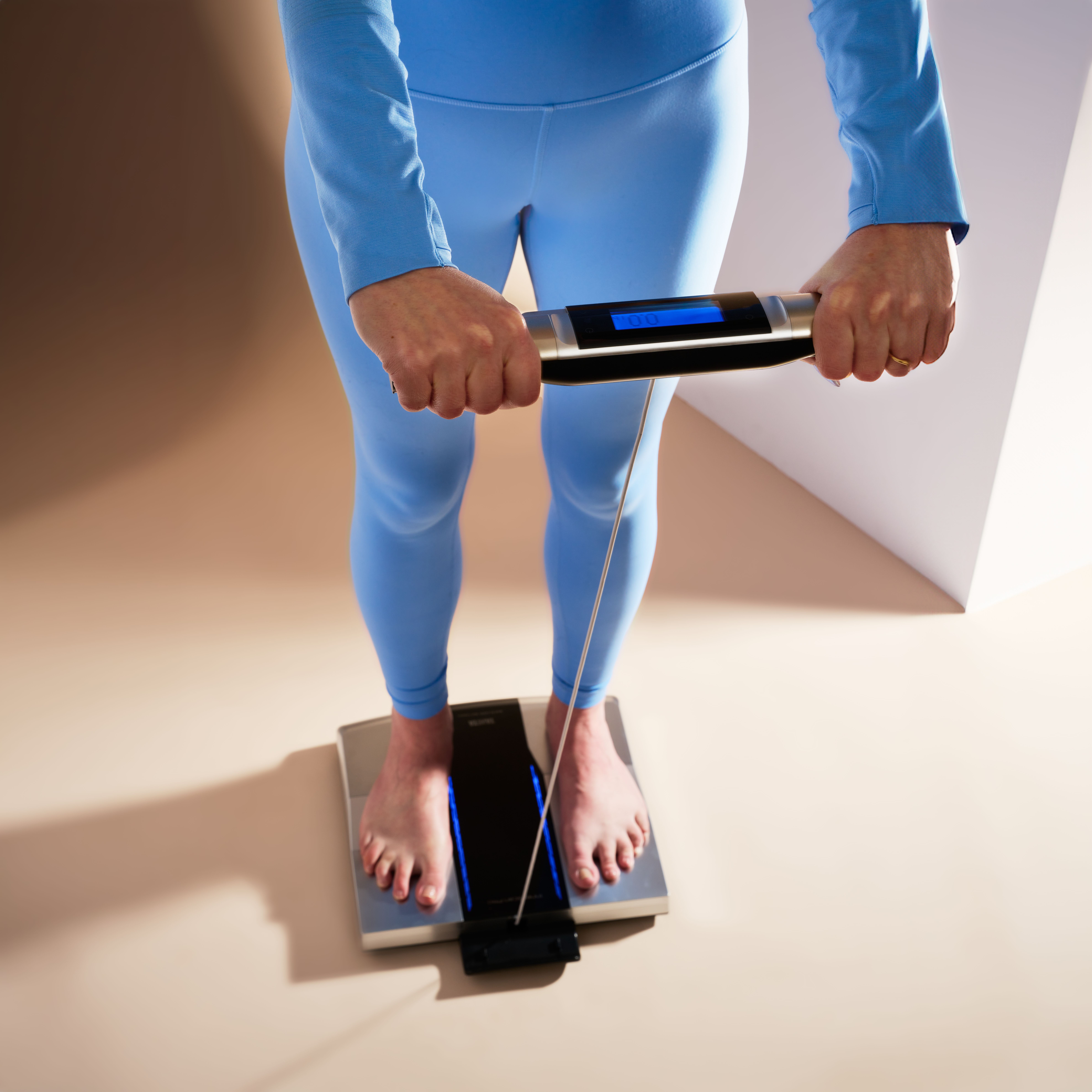
A segmental body composition analyzer does everything a non-segmental one does — plus it breaks your body down into regions: your right arm, left arm, right leg, left leg, and trunk (your core and torso), measuring each one separately.
To do this, segmental analyzers have both foot electrodes and handheld electrodes, so the electrical signal can travel through your entire body — not just your lower half. That's what allows the device to measure each region on its own.
Why does that matter? Because your body doesn't distribute fat and muscle evenly. You might be building muscle in your legs from running, but carrying more fat in your midsection. A non-segmental scale gives you the overall picture. A segmental analyzer shows you the whole story — region by region.
This is a great fit if you:
- Are ready to go deeper than overall body fat and muscle numbers
- Want to understand where in your body fat or muscle is changing
- Are working on a specific fitness goal, like building upper body strength or reducing belly fat
- Are recovering from an injury and want to track muscle changes in a specific limb
- Work with a trainer, coach, or healthcare provider who uses body composition data
Which One Should You Choose?
Here's the honest answer: if you're just starting out, a non-segmental scale is a fantastic place to begin. You'll immediately have access to data that a standard scale can never give you — and that data alone can be genuinely transformative for how you think about your health.
Once you've built a tracking habit and want to go further — or if you have a specific fitness or health goal that calls for more detail — a segmental analyzer is a natural next step. It's not that the technology is harder to use (it still takes just seconds), it simply gives you more to work with.
Both types of TANITA analyzers are designed to be used at home, and both are built on the same precision technology trusted by healthcare professionals worldwide. The right choice is simply the one that matches where you are in your health journey right now.
The Bottom Line
Non-Segmental
Segmental
Measures
Whole body
Whole body + each body region
Best for
Beginners, general wellness tracking
Fitness goals, detailed tracking, rehabilitation
Experience
Step on and go
Step on + hold handles
Data depth
Excellent overview
Deep regional breakdown
No matter which you choose, you're taking a meaningful step beyond the number on the scale — and toward a real understanding of your body.
TANITA is a global leader in precision body composition analysis, with over 75 years of innovation in measurement technology. Learn more at tanita.com (https://www.tanita.com/).
By TANITA US
TANITA US is the North American division of TANITA Corporation, the global pioneer and industry leader in Bioelectrical Impedance Analysis (BIA) technology. Founded in Japan in 1944, TANITA has more than 80 years of expertise in developing precision measurement tools and remains the world’s most trusted name in body composition assessment, serving medical professionals, researchers, athletes, and health-focused consumers in over 120 countries.