What's the Difference Between Multi-Frequency and Single-Frequency BIA?
Discover the difference between Multi-Frequency and Single-Frequency BIA. Learn which method offers more accuracy in body composition analysis.
By TANITA US
Introduction
Understanding Bioelectrical Impedance Analysis
You've probably used a smart scale before — the kind that tells you more than just your weight. Maybe it shows your body fat percentage, your muscle mass, or how hydrated you are. But have you ever wondered how it actually figures all that out?
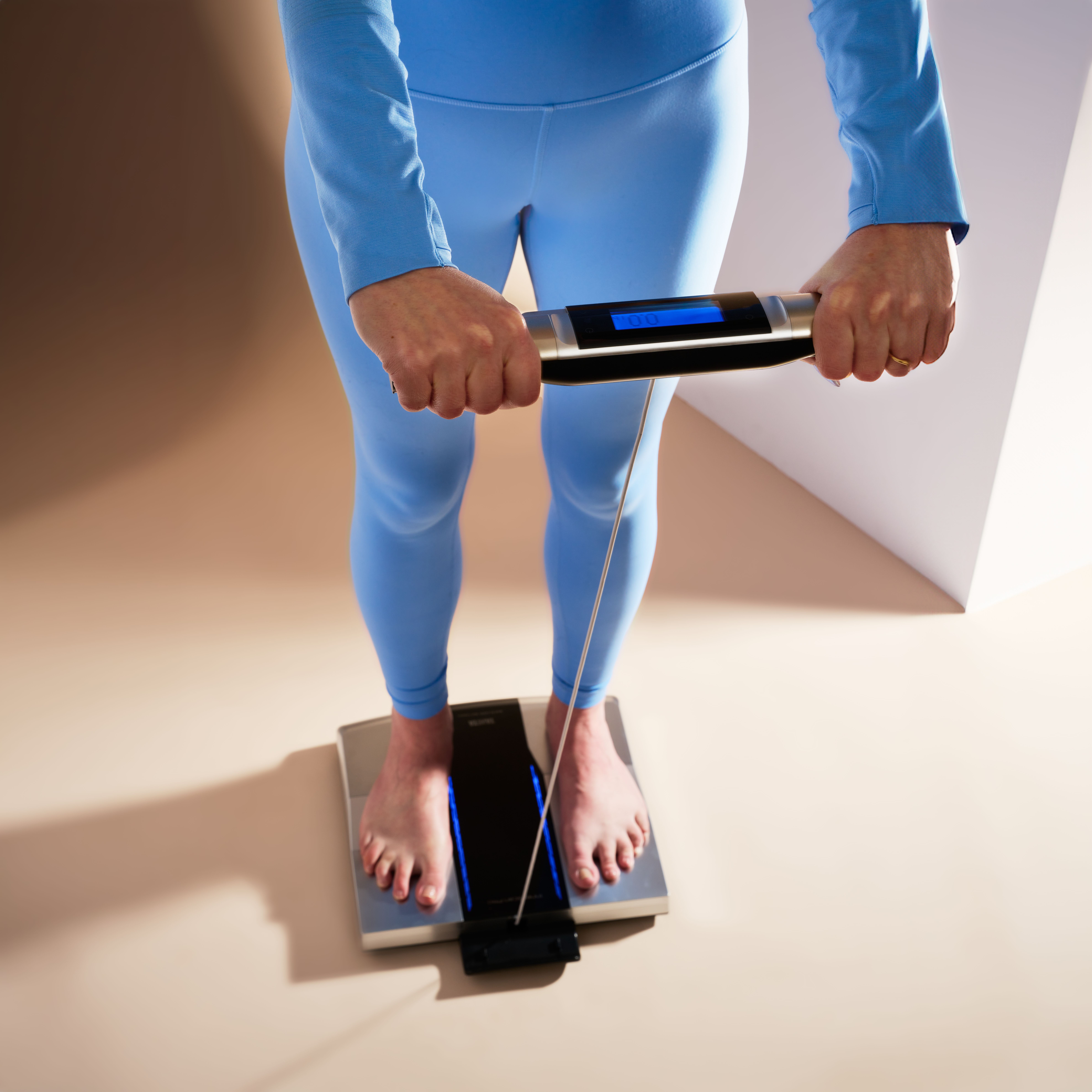
The answer is a technology called bioelectrical impedance analysis, or BIA for short. It sounds complex, but the idea is surprisingly simple: the scale sends a tiny, painless electrical signal through your body (you won't feel a thing), and measures how easily that signal travels through your tissue. Muscle and water let the signal pass through easily. Fat slows it down. From that information, the scale can estimate what your body is actually made of.
BIA is one of the most widely used methods for measuring body composition — and it comes in two main forms: Single-Frequency BIA and Multi-Frequency BIA. Understanding the difference between them can help you choose the right device for your health goals.
Importance of Body Composition Analysis
Here's the thing about body weight: the number on a traditional scale only tells part of the story. Two people can weigh exactly the same and be in very different states of health. One might carry a lot of muscle; the other might carry excess body fat. A regular scale can't tell the difference — but body composition analysis can.
When you know your body fat percentage, your muscle mass, your hydration level, and how much fat is stored around your organs (called visceral fat), you have a much clearer picture of your overall health. This kind of data helps you set smarter goals, make more informed decisions about your diet and exercise, and track what's actually changing in your body over time — not just what the scale says.
What is Single-Frequency BIA?
Definition and Mechanism
Single-Frequency BIA does exactly what the name suggests: it uses one electrical frequency to take its measurement. Most of these devices use a frequency of 50 kHz — think of it like tuning a radio to one specific station.
The signal travels through your body, and the device measures how much it's slowed down. It then combines that reading with basic information about you — your height, weight, age, and sex — to estimate your body composition. It's a quick, straightforward process, and it's the technology behind most entry-level smart scales.
Applications in Fitness Tracking
Single-Frequency BIA is a great starting point for anyone new to fitness tracking. If your main goal is to keep an eye on general trends — like whether your body fat percentage is going up or down over time — a single-frequency device can do that job well.
The key is consistency. When you measure at the same time every day, under the same conditions, a single-frequency scale gives you reliable, comparable readings you can track week after week. It's the health monitoring equivalent of checking in regularly — not perfect, but genuinely useful.
Measuring Body Fat Percentage
To estimate body fat percentage, a single-frequency scale first estimates how much water is in your body. From there, it calculates your lean mass (everything that isn't fat), and subtracts that from your total weight to arrive at your fat mass. Your body fat percentage is just that fat mass expressed as a proportion of your total weight.
This works well for most people under most circumstances. Where it can become less reliable is in specific populations — like very athletic people or older adults — whose body water ratios differ from the general population that the calculation was originally designed around. More on that in a moment.
Assessing Electrical Conductivity
Different tissues in your body conduct electricity in different ways. Muscle and water are excellent conductors — the signal moves through them easily. Body fat, on the other hand, doesn't conduct well at all, which is what allows BIA to distinguish between the two.
The challenge with a single frequency is that it can't fully separate the water inside your cells from the water outside your cells. That distinction turns out to matter quite a bit for accuracy — and it's precisely what Multi-Frequency BIA was designed to address.
What is Multi-Frequency BIA?
Definition and Mechanism
Multi-Frequency BIA takes the same core idea and makes it significantly more powerful by using several different electrical frequencies instead of just one — typically ranging from very low to very high.
Why does that help? Because different frequencies behave differently as they move through the body. Low frequencies tend to travel through the fluid around your cells. High frequencies can actually pass through cell membranes and into the fluid inside your cells. By using both, a multi-frequency device can independently measure the water inside your cells and the water outside them — giving it a much more detailed and accurate picture of what's going on inside your body.
Think of it like the difference between a photograph and an X-ray. Both show you something real, but one gives you a lot more information.
Benefits Over Single-Frequency
Because MF-BIA can see more of what's happening in your body, it tends to be more accurate across a wider range of people — including those for whom single-frequency devices are less reliable:
- Athletes and very active people, who tend to have more water inside their muscle cells than the average person
- Older adults, whose cell water ratios naturally shift with age
- People managing a health condition that affects how fluid is distributed in the body
Multi-frequency devices are also less affected by your hydration level at the time of measurement, which is one of the biggest sources of day-to-day variation in single-frequency readings. If you've ever noticed your body fat percentage jumping around unexpectedly, changes in hydration are often the culprit — and MF-BIA handles that variability more gracefully.
Detailed Insights into Body Composition
One of the biggest advantages of Multi-Frequency BIA is how much more it can tell you. Where a single-frequency device gives you a solid overview, MF-BIA can break things down in ways that are genuinely eye-opening:
- Segmental analysis — instead of one overall body fat number, you can see how fat and muscle are distributed across your arms, legs, and trunk separately. This is especially useful for people in rehabilitation or those focused on specific fitness goals.
- Intracellular and extracellular water — a breakdown of where your body water is stored, which is a useful indicator of hydration health and cellular function.
- Visceral fat — a more detailed estimate of the fat around your internal organs, which is closely linked to metabolic health.
- Overall hydration status — useful for athletes, older adults, and anyone trying to stay properly hydrated.
This level of detail gives you much more than a single number to work with — it gives you a real understanding of how your body is changing.
Enhanced Electrical Conductivity Measurements
By reading the body at multiple frequencies, MF-BIA devices build a more complete picture of how your tissue responds to electricity — and use that richer data set to produce more precise calculations. The most advanced versions of this technology are accurate enough to be used in clinical and research settings, alongside methods like DEXA scanning that require far more expensive equipment.
TANITA's professional and advanced MF-BIA devices are designed to bring this level of precision to healthcare providers, sports scientists, and health-conscious individuals who want results they can truly rely on.
Key Differences Between Multi-Frequency and Single-Frequency BIA
Frequency Usage
The simplest way to understand the difference: single-frequency devices take one reading at one frequency. Multi-frequency devices take multiple readings across a range of frequencies and analyze the full picture.
It's a bit like getting your blood pressure taken at one point in the day versus wearing a monitor that tracks it across 24 hours. Both give you useful information, but one gives you a much more complete view.
Accuracy and Reliability
Both technologies are reliable for tracking trends over time — but when it comes to absolute accuracy (how close a single measurement is to your true body composition), MF-BIA has a clear edge. Research consistently shows that multi-frequency measurements are more closely aligned with laboratory reference methods, particularly for athletes, older adults, and people with health conditions that affect fluid balance.
For most everyday users whose goal is simply to track their progress over weeks and months, a quality single-frequency device used consistently is perfectly adequate. But if precision matters to you — or if you fall outside the "average" population the single-frequency equations were built around — MF-BIA is the better choice.
Comprehensive Data Output
Here's a quick side-by-side of what each technology typically provides:
Single-Frequency BIA typically shows: Weight, body fat percentage, fat mass, fat-free mass, total body water, BMI, and estimated muscle mass.
Multi-Frequency BIA adds: Segmental fat and muscle analysis (by body region), intracellular water, extracellular water, visceral fat rating, hydration assessment, and in professional models, additional clinical markers of cellular health.
If you want the basics covered and a clear view of your trends, single-frequency delivers. If you want the full picture, multi-frequency is the upgrade worth considering.
Conclusion
Summary of Key Points
Both single-frequency and multi-frequency BIA are legitimate, valuable tools for understanding your body composition — they just operate at different levels of depth and precision.
Single-Frequency BIA is accessible, affordable, and great for everyday wellness tracking. It gives you meaningful data on body fat percentage, muscle mass, and hydration that you can use to monitor your health over time.
Multi-Frequency BIA takes things further, using a range of frequencies to produce more detailed and more accurate measurements. It's better suited to people who want deeper insights, those with specific health or performance goals, and anyone for whom single-frequency estimates tend to be less accurate.
Which BIA Method to Choose?
If you're just getting started with body composition monitoring and want to track your progress in a simple, effective way, a TANITA single-frequency at-home scale is an excellent place to begin. You'll get far more information than a traditional scale provides, and if you use it consistently, you'll quickly start seeing meaningful trends.
If you're ready for a deeper level of insight — whether you're an athlete, a fitness enthusiast who wants to understand the details, or someone managing a specific health goal — TANITA's Multi-Frequency BIA devices offer a significant step up in accuracy and data richness. You'll see not just where you are, but a more complete picture of why — and that makes all the difference when it comes to taking action.
Whichever you choose, you're moving beyond the number on a scale and toward a genuine understanding of your body. That's a step worth taking.
TANITA is a global leader in precision body composition analysis, with over 75 years of innovation in measurement technology. Our full range of single-frequency and multi-frequency BIA devices serves healthcare professionals, elite athletes, and health-conscious individuals around the world. Learn more at tanita.com (https://www.tanita.com/).
By TANITA US
TANITA US is the North American division of TANITA Corporation, the global pioneer and industry leader in Bioelectrical Impedance Analysis (BIA) technology. Founded in Japan in 1944, TANITA has more than 80 years of expertise in developing precision measurement tools and remains the world’s most trusted name in body composition assessment, serving medical professionals, researchers, athletes, and health-focused consumers in over 120 countries.