Visceral Fat, Explained: The Hidden Number That Matters Most
Part of our Metric of the Month series — a plain-language look at the measurements on your TANITA scale and how to act on them. When most people step on a scale, they look at one number: their weight. But two people can weigh exactly the same and have very different health profiles — and one of the biggest reasons is a type of fat you can't see in the mirror. It's called visceral fat, and understanding it is one of the most valuable things your TANITA body composition monitor can help you do. Here's what it is, why it matters more than the number on a standard scale, and the practical, sustainable ways to bring it down.
By TANITA US

Part of our Metric of the Month series — a plain-language look at the measurements on your TANITA scale and how to act on them.
When most people step on a scale, they look at one number: their weight. But two people can weigh exactly the same and have very different health profiles — and one of the biggest reasons is a type of fat you can't see in the mirror. It's called visceral fat, and understanding it is one of the most valuable things your TANITA body composition monitor can help you do.
Here's what it is, why it matters more than the number on a standard scale, and the practical, sustainable ways to bring it down.
What Visceral Fat Actually Is
Not all body fat is the same. The fat you can pinch just beneath your skin — on your arms, thighs, or belly — is called subcutaneous fat. It's visible, and while it plays a role in overall health, it's not the fat that concerns health professionals most.
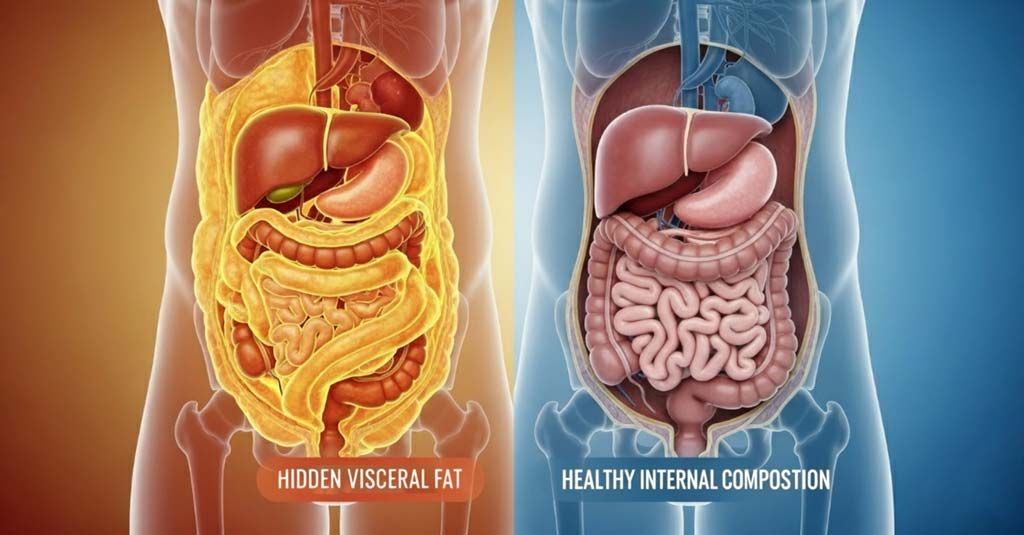
Visceral fat is different. It's stored deep inside your abdominal cavity, wrapped around vital organs like your liver, pancreas, and intestines. Because it sits out of sight, it's easy to overlook entirely — you can carry a meaningful amount of it without it being obvious from the outside. In fact, some people with a relatively "normal" weight or waistline still carry elevated visceral fat, a pattern sometimes described as being "skinny fat."
That invisibility is exactly why measuring it matters. You can't judge visceral fat by appearance or by weight alone — you have to actually track it.
Why It Matters More Than Weight
Visceral fat isn't just inert storage. It's metabolically active tissue that releases hormones and inflammatory compounds directly into the bloodstream that feeds your organs. That's why it's so closely tied to long-term health.
Research consistently links higher levels of visceral fat with an increased risk of:
- Type 2 diabetes and insulin resistance, as visceral fat interferes with how your body manages blood sugar
- Heart disease and high blood pressure, from added strain on your cardiovascular system
- Unfavorable cholesterol and triglyceride levels
- Chronic, low-grade inflammation throughout the body
This is the core reason body composition matters more than a single weight reading. Two people at the same weight can have very different amounts of visceral fat — and therefore very different health risks. Tracking your body composition gives you a truer, more actionable picture than the bathroom scale ever could.
How to Read Your TANITA Visceral Fat Rating

Most TANITA body composition monitors report visceral fat as a rating from 1 to 59, so you can see exactly where you stand and track it over time:
- 1–12 — Healthy range. Your visceral fat is at a healthy level. The goal here is simply to maintain it.
- 13–59 — Excess range. This indicates an excess of visceral fat. It's worth taking action, and the good news is that visceral fat often responds well to lifestyle changes.
The real value isn't any single reading — it's the trend. Check your rating consistently (say, every couple of weeks, at the same time of day) and watch which direction it's moving over months, not days.
Ratings and available metrics vary by model. Check your product manual to confirm what your specific TANITA monitor measures.
How to Reduce Visceral Fat
Here's the encouraging part: of all the fat in your body, visceral fat is often among the most responsive to consistent, healthy habits. You don't need extremes — you need repeatable routines. A few of the most effective, evidence-backed approaches:
Move regularly, and mix it up. A combination of aerobic exercise (brisk walking, cycling, swimming) and strength training tends to be especially effective for reducing visceral fat. Even daily walking — a habit built into everyday life in many of the world's healthiest cultures — adds up over time.
Build meals around whole foods. Emphasize fiber, lean protein, and vegetables, and cut back on refined carbohydrates, added sugar, and heavily processed foods. Fiber in particular is associated with lower visceral fat.
Watch your alcohol intake. Excess alcohol is linked to increased fat storage around the midsection.
Protect your sleep. Poor and insufficient sleep is associated with greater visceral fat accumulation. Aim for consistent, quality rest.
Manage stress. Chronically elevated stress hormones like cortisol can encourage the body to store fat around the abdomen. Practices that lower day-to-day stress support your results.
None of these is a quick fix, and that's the point. Small, sustainable habits — the kind you can keep for years — are what move this number in the right direction and keep it there.
Awareness Is Where It Starts
At TANITA, we believe healthy living starts with awareness: knowing your numbers and building simple routines you can actually sustain. Visceral fat is a perfect example of why that matters — it's a number you'd never notice by looking in the mirror, but one that tells you something meaningful about your long-term health.
Step on your TANITA, find your visceral fat rating, and use it as a baseline. Then check back in a few weeks and watch the trend. That's how awareness turns into progress.
This article is for general educational purposes and is not medical advice. If you have questions about your visceral fat level or overall health, consult a qualified healthcare professional.
Next in our Metric of the Month series: Muscle Mass — why it's the number you want to see go up.
By TANITA US
TANITA US is the North American division of TANITA Corporation, the global pioneer and industry leader in Bioelectrical Impedance Analysis (BIA) technology. Founded in Japan in 1944, TANITA has more than 80 years of expertise in developing precision measurement tools and remains the world’s most trusted name in body composition assessment, serving medical professionals, researchers, athletes, and health-focused consumers in over 120 countries.