5 Proven Effective Weight Loss Strategies You Can Start Today
By TANITA US

If losing weight feels complicated, the good news is that the approaches with the strongest evidence behind them are also the most practical. You do not need a fad diet or an extreme routine. You need a handful of effective weight loss strategies that fit into everyday life and that you can actually keep up. This guide walks through five of them — each grounded in research and each something you can begin today.
One idea threads through all five: the number on your bathroom scale is only part of the story. Weight tells you how much you weigh, but not what you are made of. Throughout this article we will show why tracking body composition — fat, muscle, and other metrics — leads to smarter decisions and better long-term results than chasing weight alone.
Understanding Weight Loss
What Are Proven Weight Loss Methods?
Proven weight loss methods are the ones supported by consistent scientific evidence rather than marketing claims. Research repeatedly points to the same foundations: a modest calorie deficit, adequate protein, regular physical activity, sufficient sleep, and managing stress. A 2024 review found that multicomponent programs — combining more than two behavioral strategies, such as nutrition changes plus activity plus self-monitoring — outperform single tactics used in isolation.
In other words, no single trick does the work. The most reliable results come from stacking several sensible habits and staying consistent with them over time.
Importance of Customized Weight Loss Plans
The same program will not fit everyone. Your age, starting point, activity level, food preferences, schedule, and health history all shape what will realistically work for you. This is why customized weight loss plans tend to succeed where one-size-fits-all diets fail — they account for the life you actually live, making the plan easier to sustain.
Personalization also means defining what success looks like for you specifically. Someone aiming to drop body fat while keeping their strength will structure their nutrition and training differently from someone focused purely on the scale. Clear, individual goals make every later decision simpler.
Fat Loss vs. General Weight Loss: Understanding the Difference
This distinction is the heart of the whole article. "Weight" is the combined total of your muscle, fat, bone, and water. When that number drops, it does not tell you which of those components you lost. Rapid weight loss often includes water and even muscle — and losing muscle is counterproductive, because muscle keeps your metabolism higher and your body stronger.
What most people actually want is fat loss, specifically reducing fat while preserving (or even building) lean muscle. A body composition scale makes that difference visible. Instead of celebrating a two-pound drop that might be dehydration, you can confirm whether you truly lost fat — the outcome that improves both health and appearance.
Strategy 1: Mindful Eating Strategies
Techniques for Mindful Eating
Mindful eating strategies are about paying full attention to the experience of eating so you can recognize genuine hunger and fullness. A few techniques to start with:
- Eat without screens, so you notice flavors, textures, and when you begin to feel satisfied.
- Slow down and chew thoroughly — it takes roughly 20 minutes for fullness signals to reach your brain.
- Pause halfway through a meal and ask whether you are still hungry or simply eating out of habit.
- Check in before snacking: are you hungry, or bored, stressed, or tired?
Benefits of Mindfulness in Weight Loss
A recent systematic review identified seven randomized controlled trials on mindful eating, and the quality of that evidence has strengthened in newer studies. Many found meaningful reductions in weight, cravings, and emotional or binge eating, though researchers note that study sizes and durations still vary, so the effect is promising rather than guaranteed.
Even setting the scale aside, mindfulness helps you build a healthier relationship with food. By separating physical hunger from emotional eating, you naturally reduce mindless overeating — a change that supports every other strategy in this guide.
Strategy 2: Incorporating Nutrient-Dense Foods for Weight Loss
Definition of Nutrient-Dense Foods
Nutrient-dense foods for weight loss deliver a high amount of nutrients — protein, fiber, vitamins, and minerals — relative to their calories. They help you feel full and nourished on fewer calories, which makes a deficit far easier to maintain. Protein and fiber are especially valuable: a 2025 narrative review highlighted that higher-protein, energy-restricted diets (about 1.2 to 1.6 grams of protein per kilogram of body weight daily) produce greater fat loss while helping preserve lean muscle, and viscous fiber increases fullness and helps regulate appetite.
Examples of Healthy Snack Options for Weight Loss
Smart snacking keeps hunger in check between meals. Some healthy snack options for weight loss that combine protein, fiber, or both include:
- Greek yogurt or cottage cheese with berries
- A small handful of almonds or walnuts
- Hard-boiled eggs
- Apple or vegetable sticks with hummus or nut butter
- Edamame or roasted chickpeas
- Air-popped popcorn for a high-volume, low-calorie option
The pattern is simple: pair a protein or fiber source with whole foods, and skip ultra-processed snacks that spike hunger soon after.
Strategy 3: Evidence-Based Weight Loss Strategies for 2025
Exploring Recent Research
The most useful effective evidence-based weight loss strategies for 2025 reinforce the fundamentals rather than replace them. A 2024 network meta-analysis of 78 randomized trials confirmed that eating more protein than the standard recommendation helps protect against weight regain and preserves lean mass during a diet. Research also continues to link short sleep (under seven hours a night) with higher cortisol, more abdominal fat storage, and stronger cravings for high-calorie comfort foods.
Dietary patterns matter too. Mediterranean and DASH-style eating — rich in vegetables, unsaturated fats, and fiber — are repeatedly associated with better weight management, lower inflammation, and improved insulin sensitivity, making them dependable frameworks rather than short-term diets.
Effective Weight Loss Tactics to Consider
Drawing the research together, a few high-value tactics stand out:
- Prioritize protein at every meal to preserve muscle and stay full longer.
- Protect your sleep — aim for seven to nine hours to keep hunger hormones and cravings in check.
- Self-monitor your food, activity, and body composition, since tracking is one of the most consistent predictors of success.
- Build meals around whole foods using a Mediterranean- or DASH-style pattern.
Strategy 4: Creating a Customized Plan for Your Needs
Assessing Your Individual Goals
Before changing anything, get specific about your goal. "Lose weight" is vague; "lose fat while maintaining muscle," "reduce visceral fat for better health," or "build muscle while slowly leaning out" each point to a different plan. Someone prioritizing muscle will eat more protein and train with resistance; someone focused on health markers will pay close attention to visceral fat. Naming the real objective is what turns a generic diet into a customized plan.
Tracking Progress and Adjustments
This is where measuring beyond weight pays off. A body composition scale lets you see whether your plan is doing what you intended — and adjust before you waste weeks heading the wrong way. If the scale weight is steady but your body fat is falling and muscle is holding, your plan is working even though the number looks flat. If weight drops but muscle is falling too, that is a signal to add protein or resistance training.
Body composition monitors such as TANITA scales track a range of metrics that map directly onto weight-loss goals. Rather than a single number, you get a fuller picture you can act on:
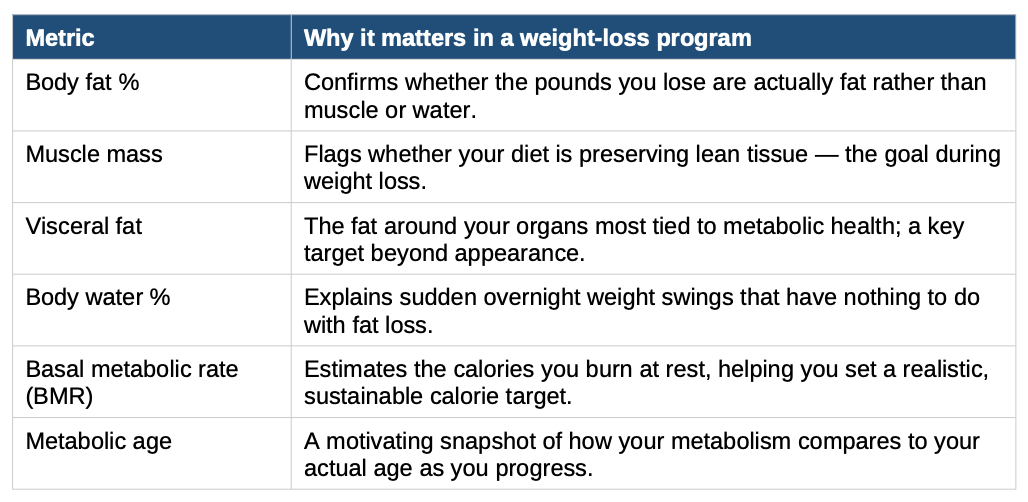
For consistent readings, measure under similar conditions — ideally the same time of day and hydration level — and watch the trend over weeks rather than reacting to any single measurement. Reviewing body fat and muscle together tells you far more about your progress than weight ever could on its own.
Strategy 5: Daily Habits to Sustain Weight Loss
Building a Routine
Lasting results come from habits, not heroics. The most sustainable plans fold naturally into your day: preparing a few meals in advance, keeping nutrient-dense snacks within reach, scheduling movement at a consistent time, and setting a regular bedtime. When healthy choices become the default rather than a daily decision, they require far less willpower to maintain.
Start small and stack habits over time. Adding one manageable change every couple of weeks is more durable than overhauling everything at once and burning out.
Staying Motivated
Motivation is easiest to sustain when you can see progress — which is another reason to track more than weight. On weeks when the scale stalls, body composition data can reveal that you are still losing fat or gaining muscle, keeping you encouraged through the natural plateaus every journey includes. Celebrating non-scale wins like better energy, stronger workouts, or improved metabolic age helps too.
Finally, be patient and consistent. Sustainable fat loss is gradual, and the habits you build with these five effective weight loss strategies are designed to last long after you reach your goal. Focus on the trend, trust the process, and let the full picture of your health — not just a single number — guide the way.
By TANITA US
TANITA US is the North American division of TANITA Corporation, the global pioneer and industry leader in Bioelectrical Impedance Analysis (BIA) technology. Founded in Japan in 1944, TANITA has more than 80 years of expertise in developing precision measurement tools and remains the world’s most trusted name in body composition assessment, serving medical professionals, researchers, athletes, and health-focused consumers in over 120 countries.